
The Fonzo Guitar Museum is a heaven for music lovers, showcasing rare and priceless guitars that highlight milestones in musical and cultural history. Founded by Ekachai and his team after years of global journeys, the museum preserves these treasures and shares their stories with enthusiasts worldwide. Each guitar reflects craftsmanship, innovation, and the timeless power of music—inviting all to discover the artistry behind these historic strings.
ex. paul galbraith
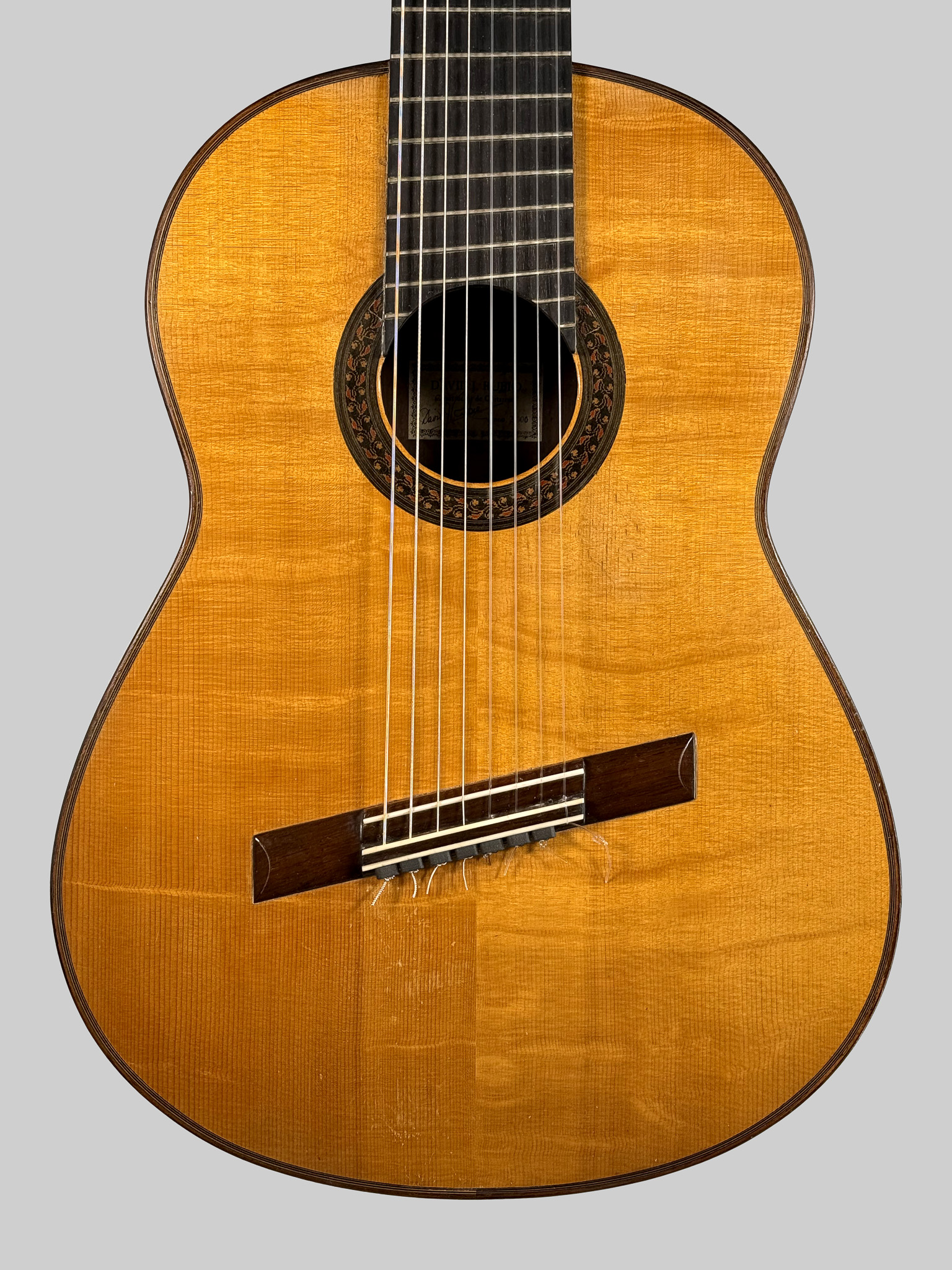
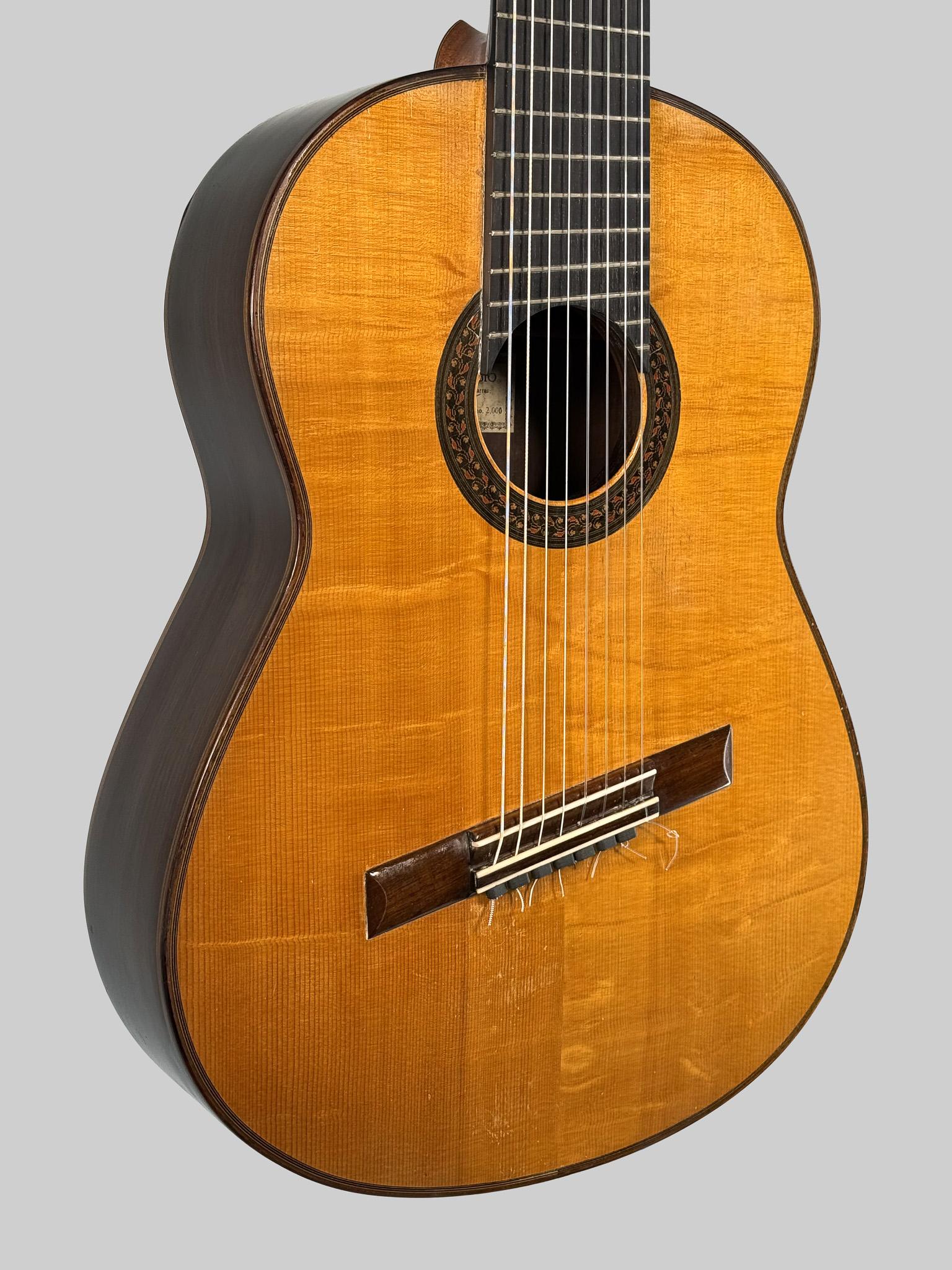
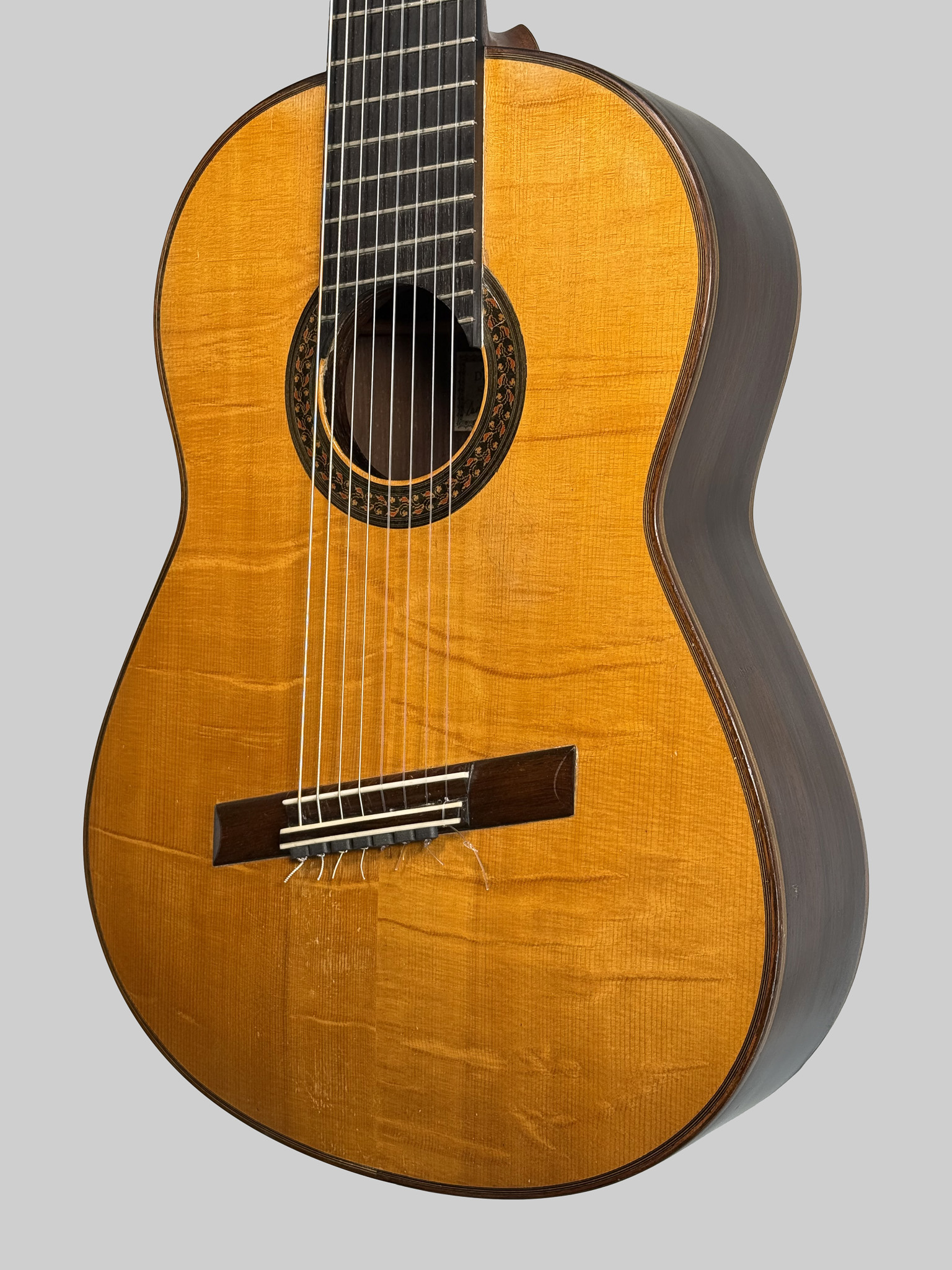
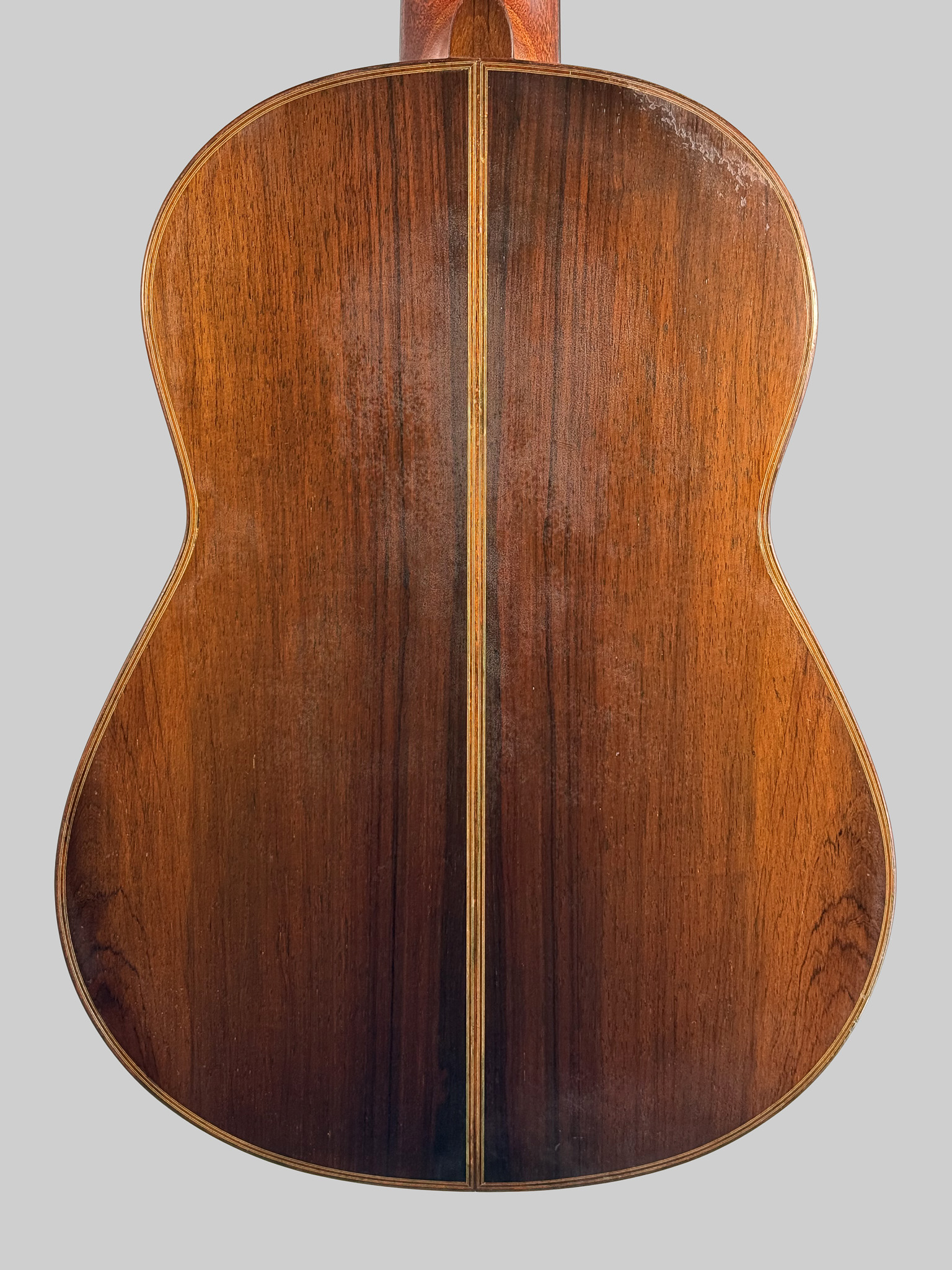
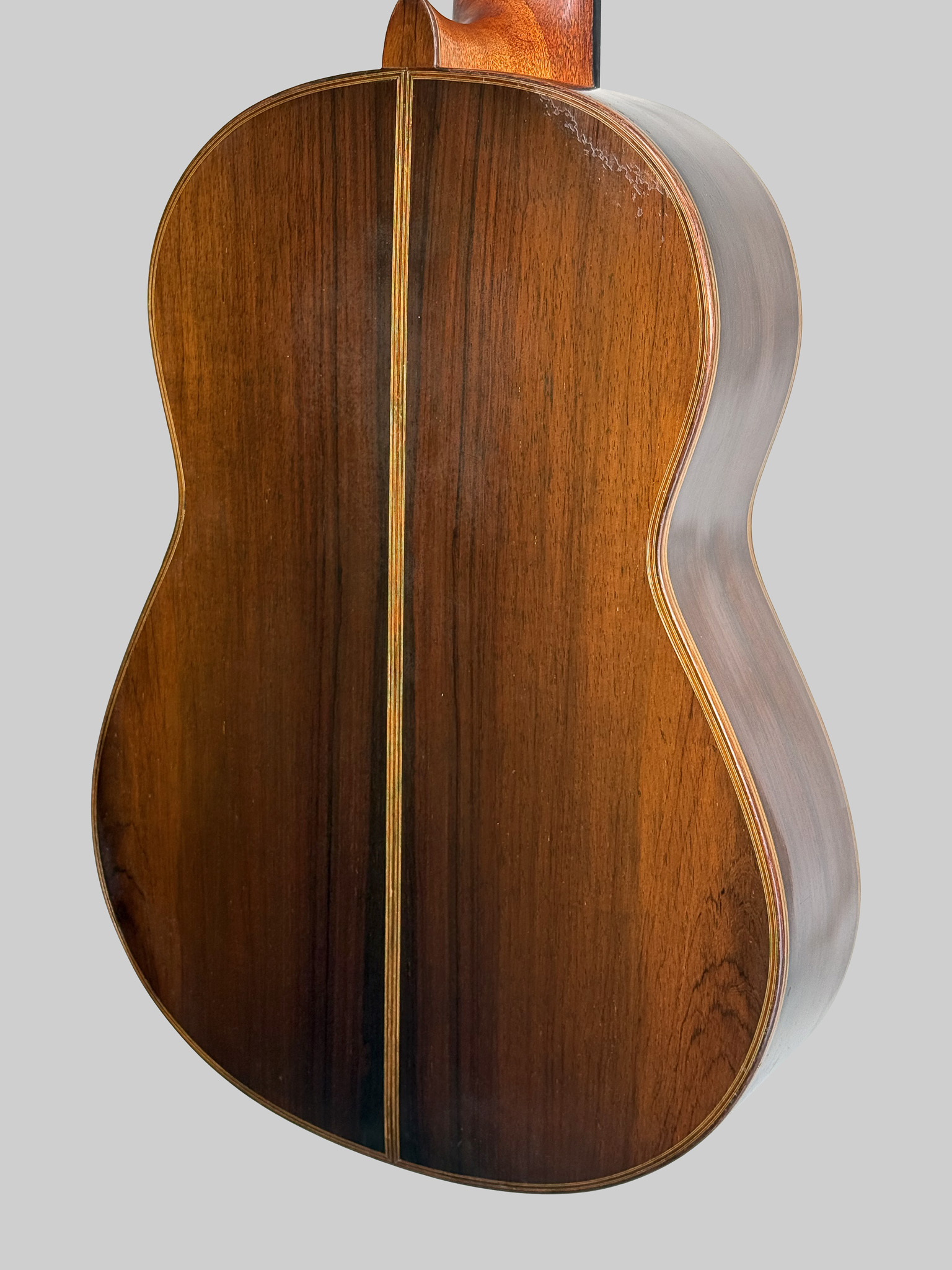
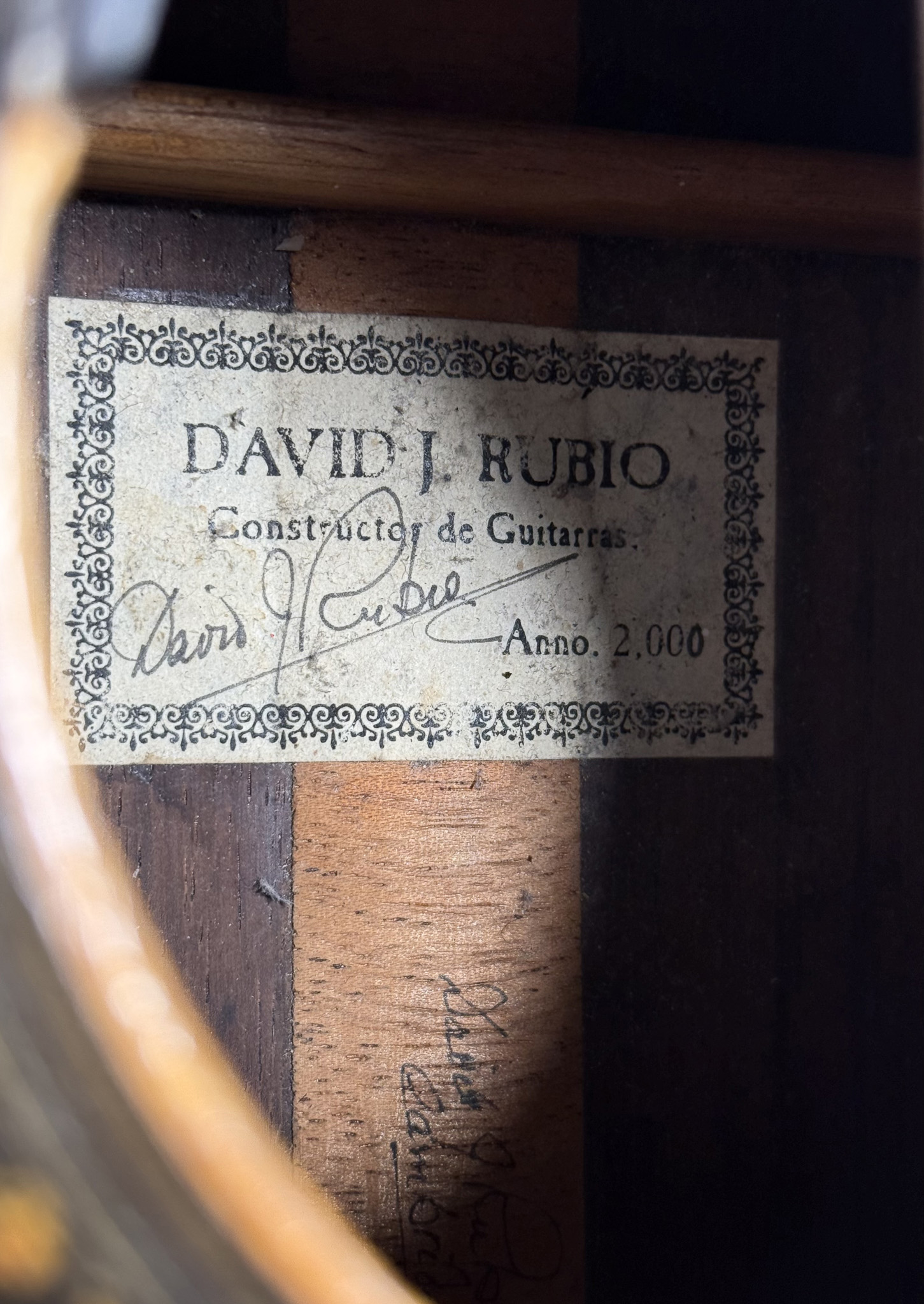
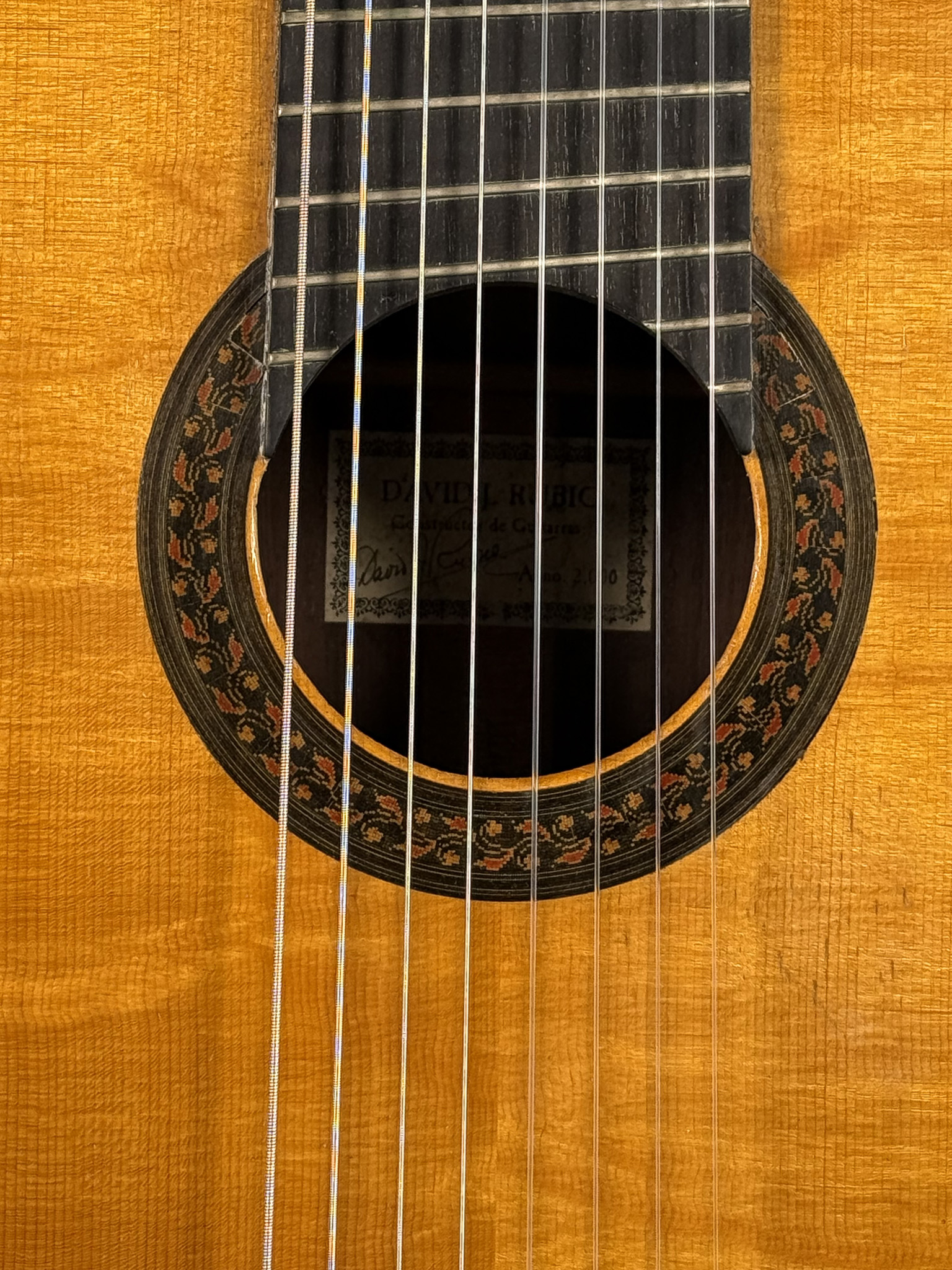
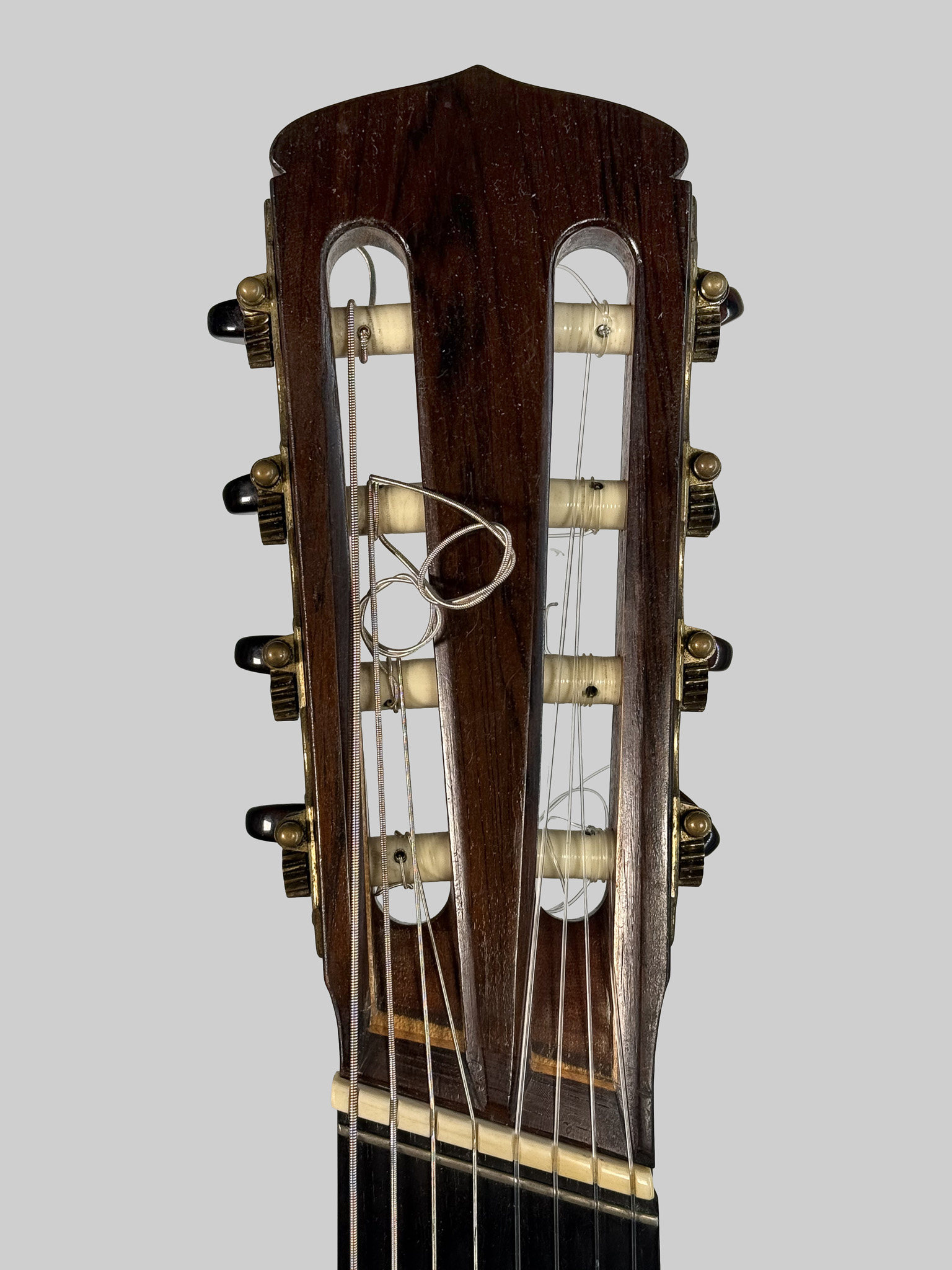
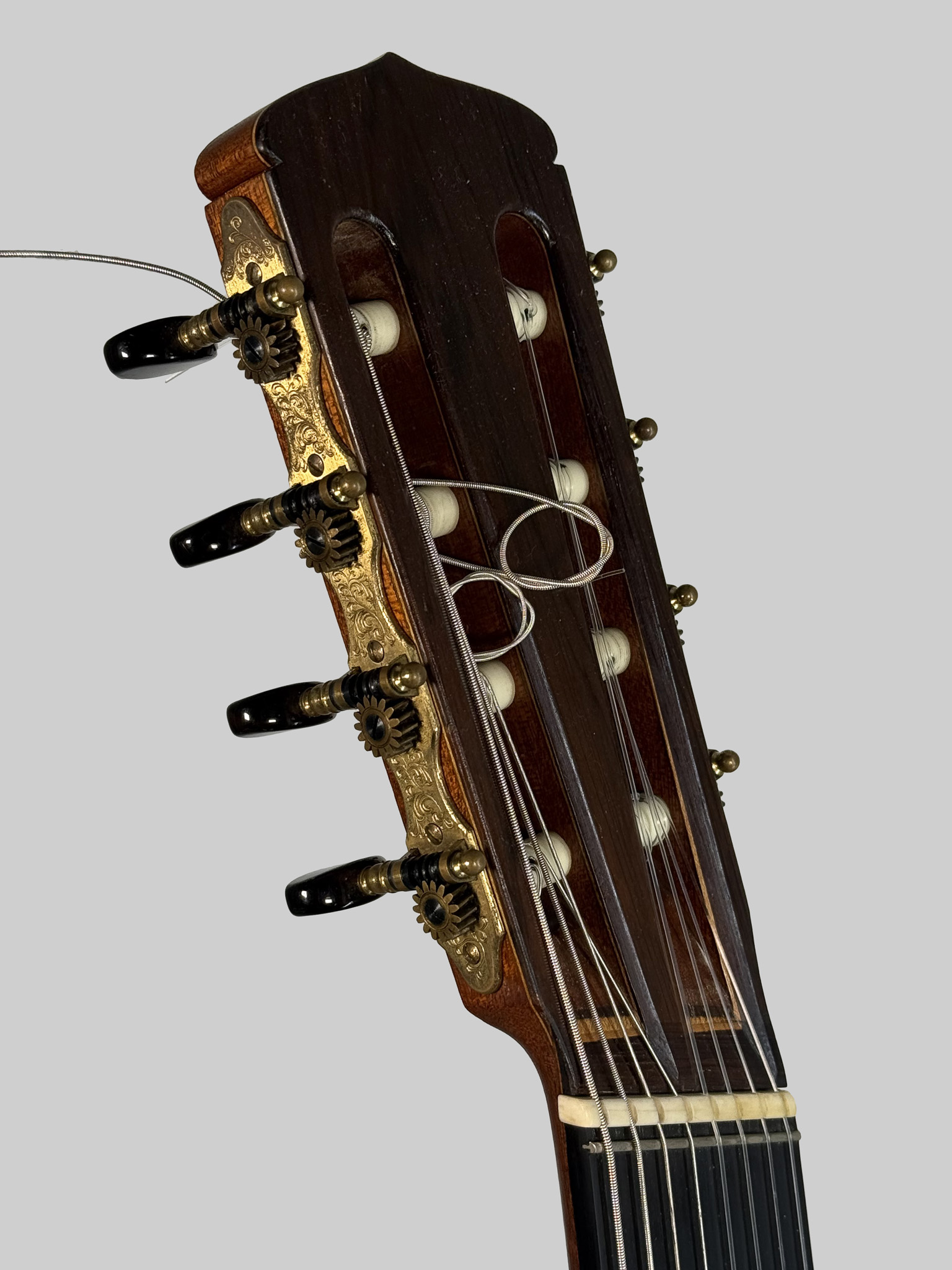
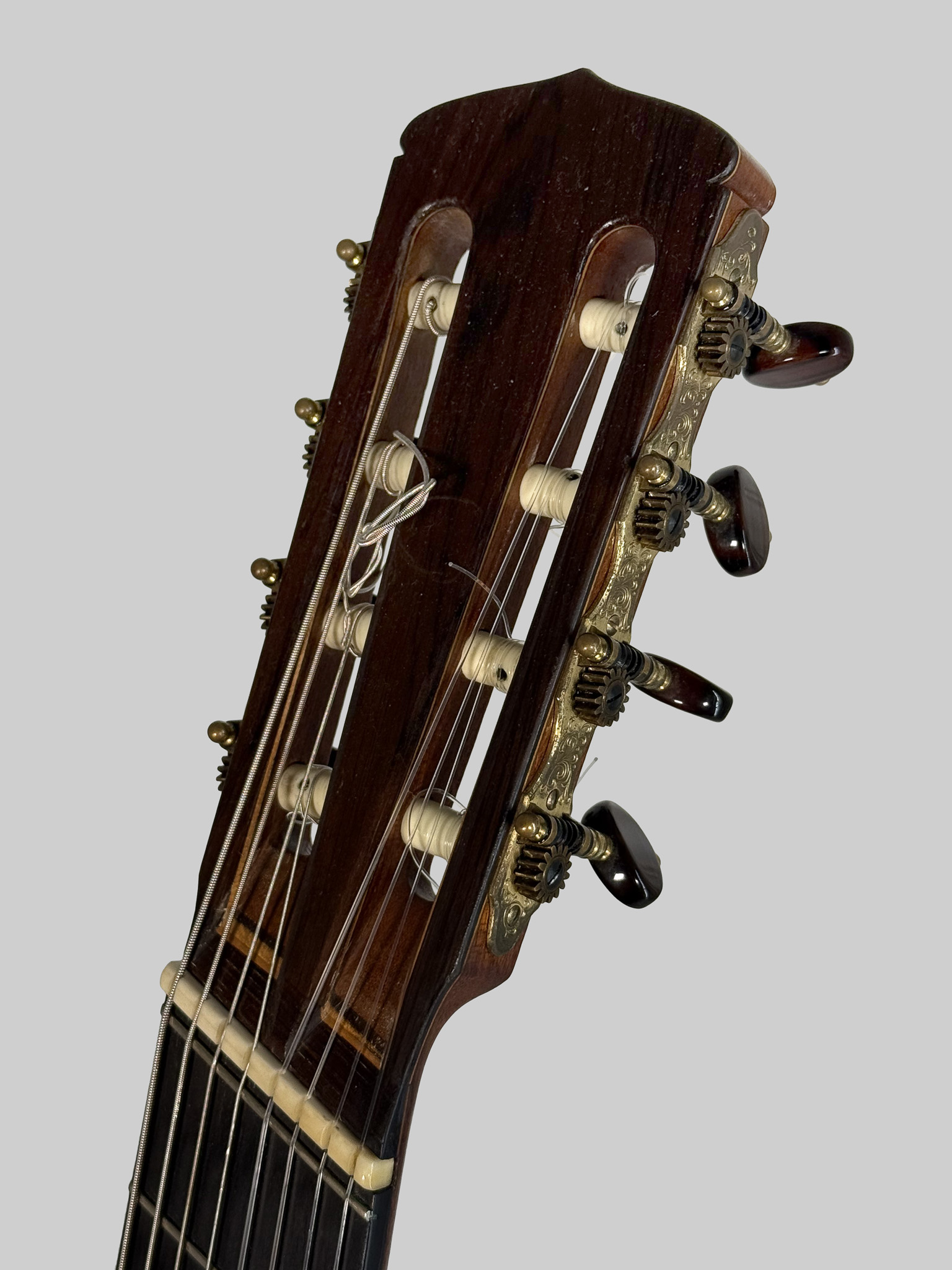
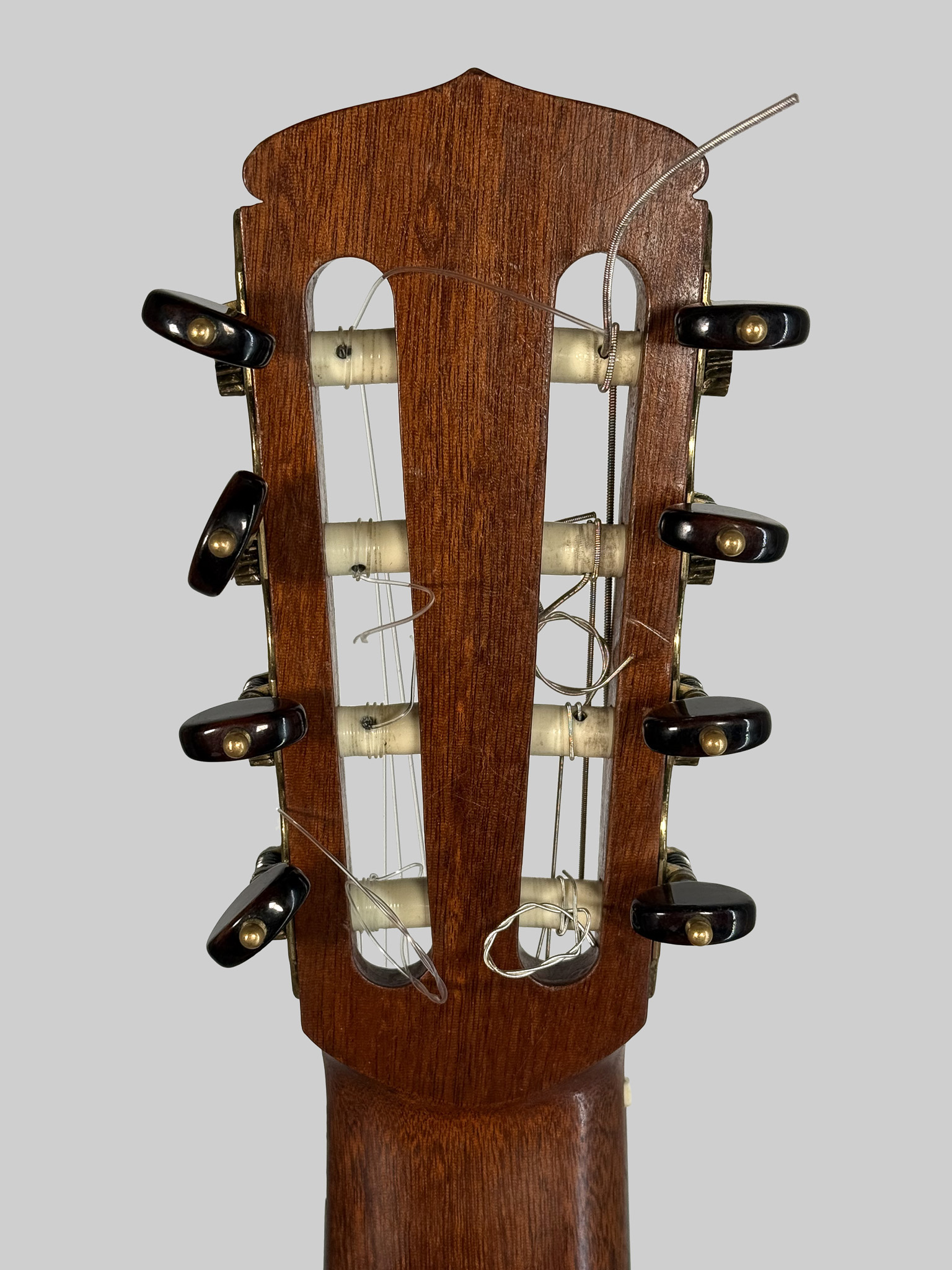
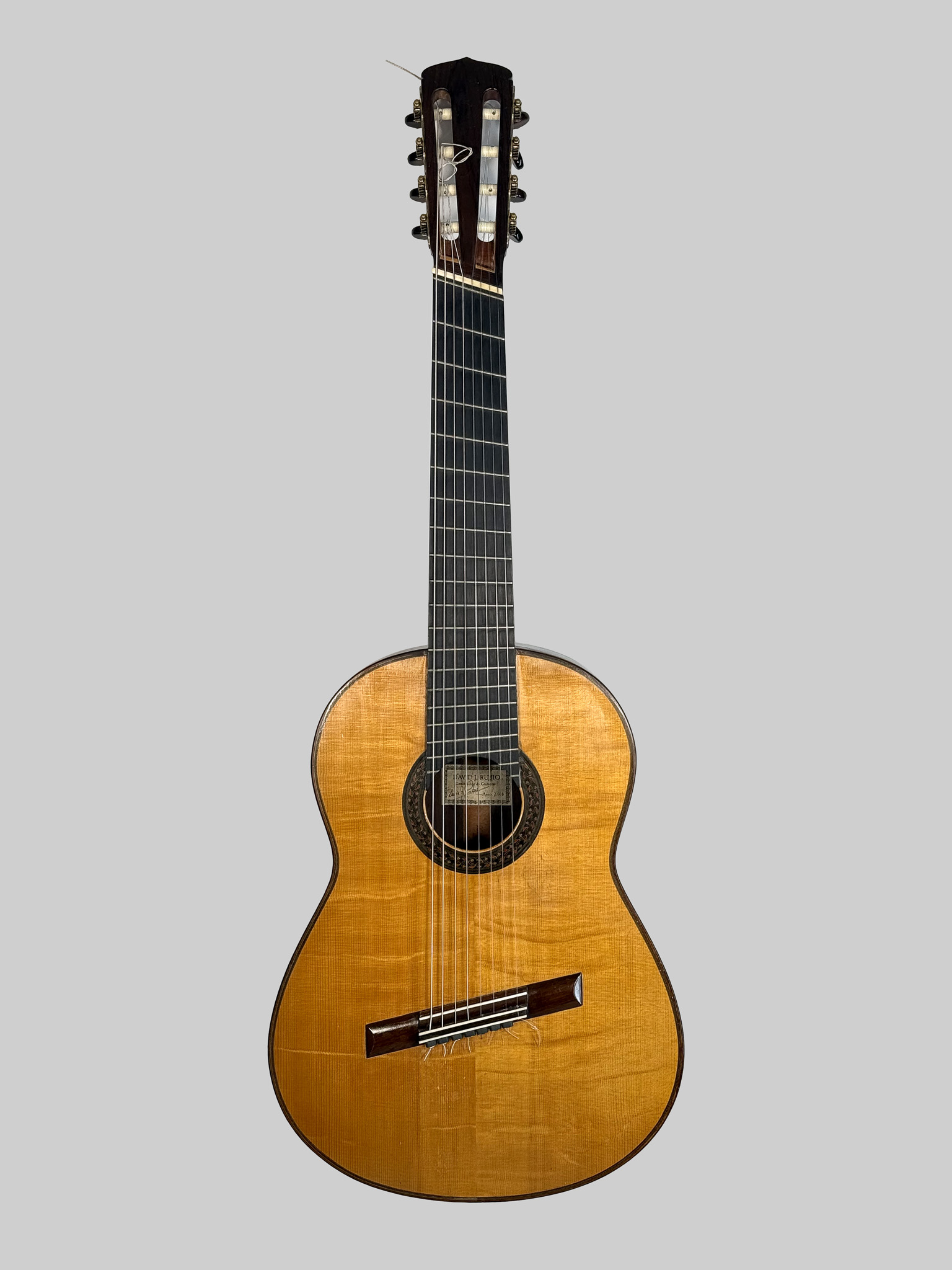
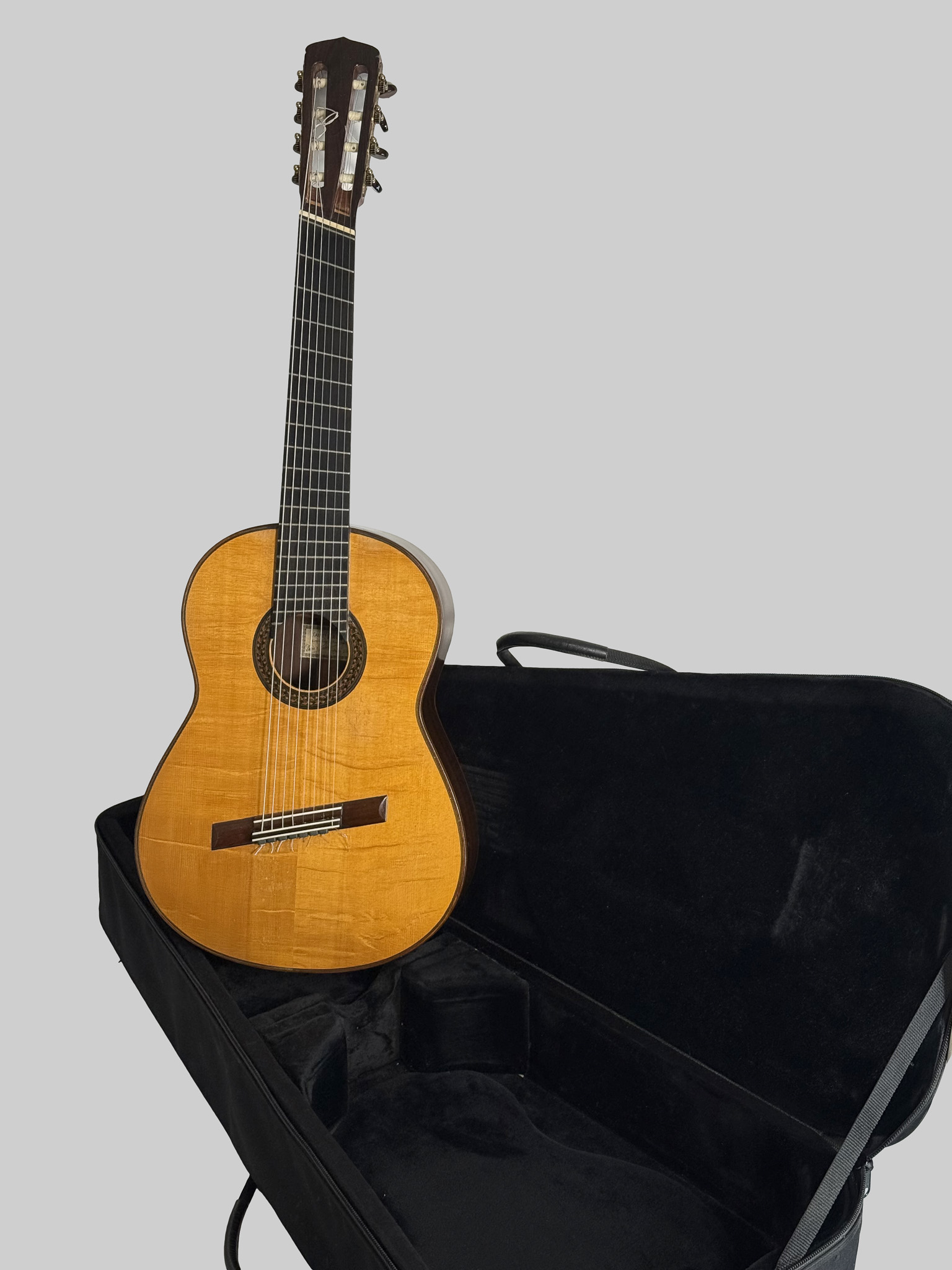
2000 David Rubio “Brahms Guitar” Ex. Paul Galbraith — The Last Guitar by David Rubio
Few instruments in modern classical guitar history represent such a remarkable union of maker, musician and innovation as the Brahms Guitar created by David Rubio and Paul Galbraith. This particular example, completed in 2000 for Galbraith, carries an exceptional historical distinction: it was the last guitar made by David Rubio.
David Rubio was one of the most important and inventive British luthiers of the twentieth century. An important chapter of his career was his relationship with Julian Bream, who encouraged Rubio’s development as a maker and later invited him to establish a workshop at his home in England. Rubio went on to build instruments for Bream while developing a reputation extending far beyond guitar making, encompassing historical plucked instruments, harpsichords and bowed instruments.
Decades later, Rubio entered into another extraordinary relationship with a great guitarist, Paul Galbraith.
Born in Scotland, Galbraith emerged as one of the most individual classical guitarists of his generation. His search for greater musical freedom led him beyond both the conventional six-string guitar and its traditional playing position. Working together, Galbraith and Rubio developed an instrument that would fundamentally expand the possibilities of the classical guitar.
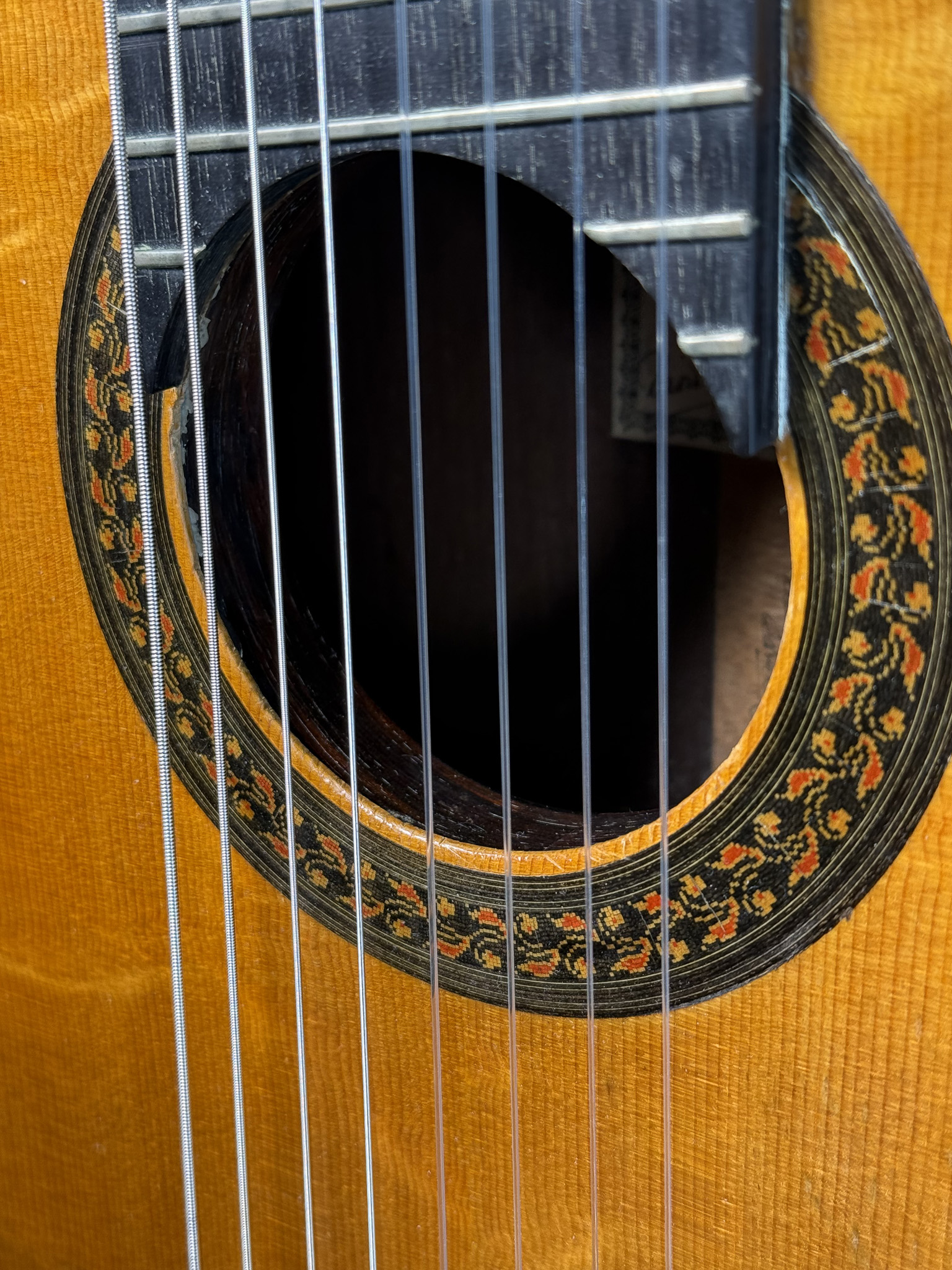
The resulting Brahms Guitar, first realized in 1993, added two strings to the traditional six-string configuration, one extending the bass register and another extending the treble. Rubio also incorporated a distinctive fan-fretted fingerboard, accommodating different string lengths across the expanded register.
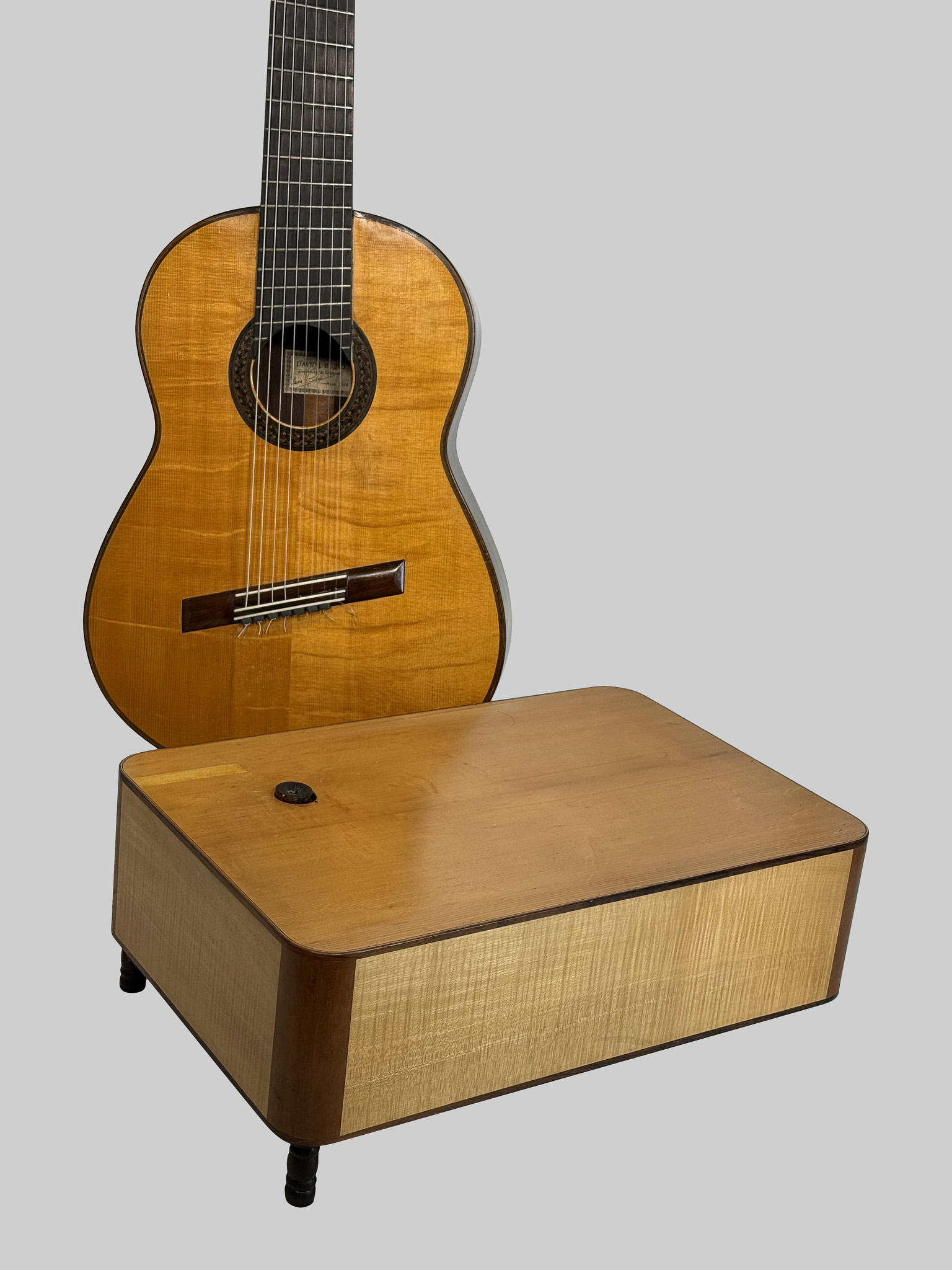
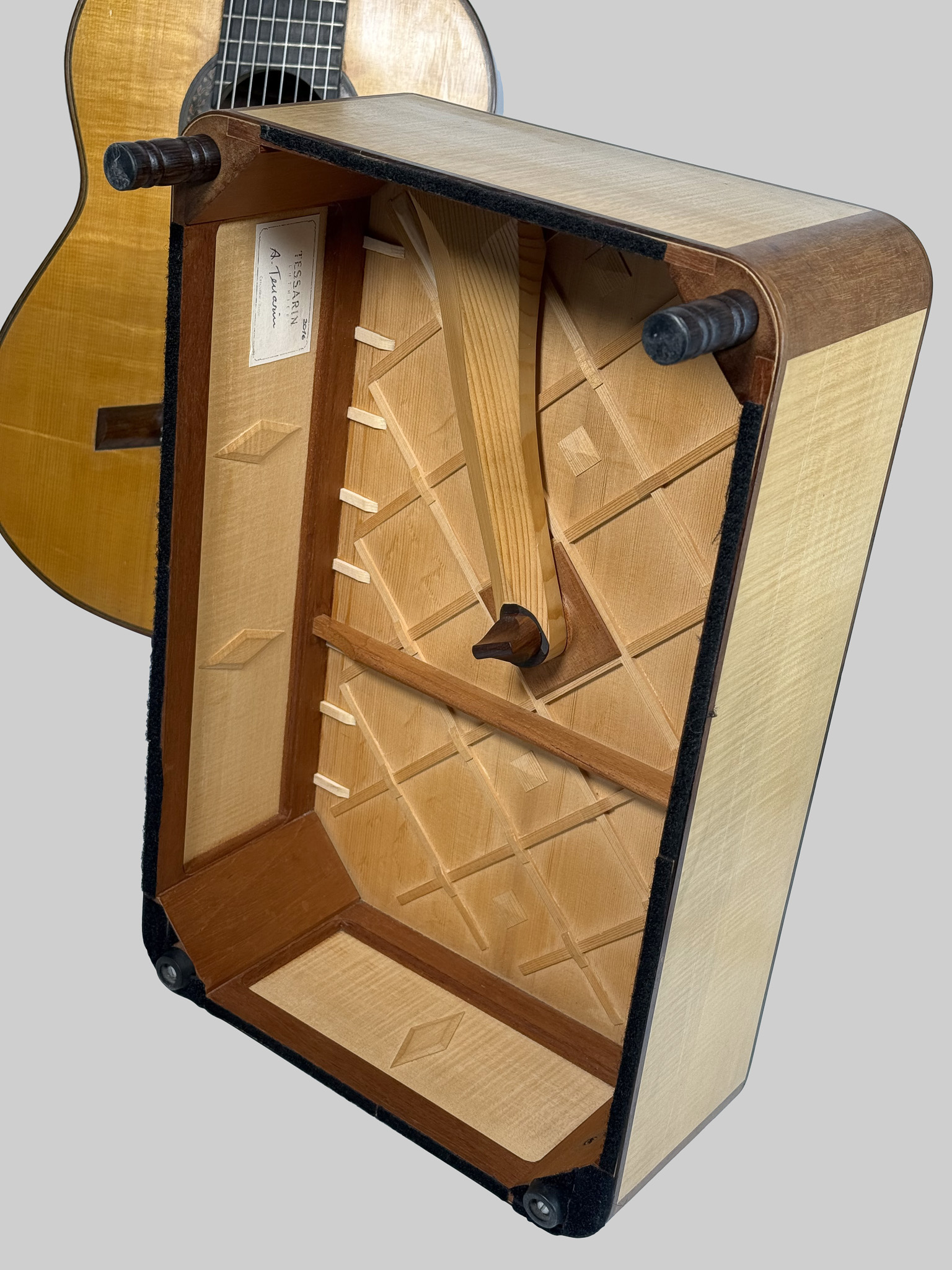
Yet the concept extended beyond the guitar itself. Galbraith plays the instrument vertically, in a cello-like position, supported by a metal endpin resting on a wooden resonance box. This allows the guitar body to remain free from the damping effect of being held conventionally against the player, while the resonance box becomes an acoustic extension of the instrument. Galbraith has described its effect as subtly amplifying and enriching what the guitar already produces, creating greater fullness, depth and tonal integration.
Together, the eight-string range, fan-fretted design, vertical playing position, endpin and resonance box created an entirely new musical system, one conceived not simply for novelty, but to give Galbraith greater freedom in voicing, transcription, resonance and expression. After hearing Galbraith perform his transcription of Brahms’ Variations, Op. 21a, Rubio gave their creation the name by which it became known: the “Brahms Guitar.”
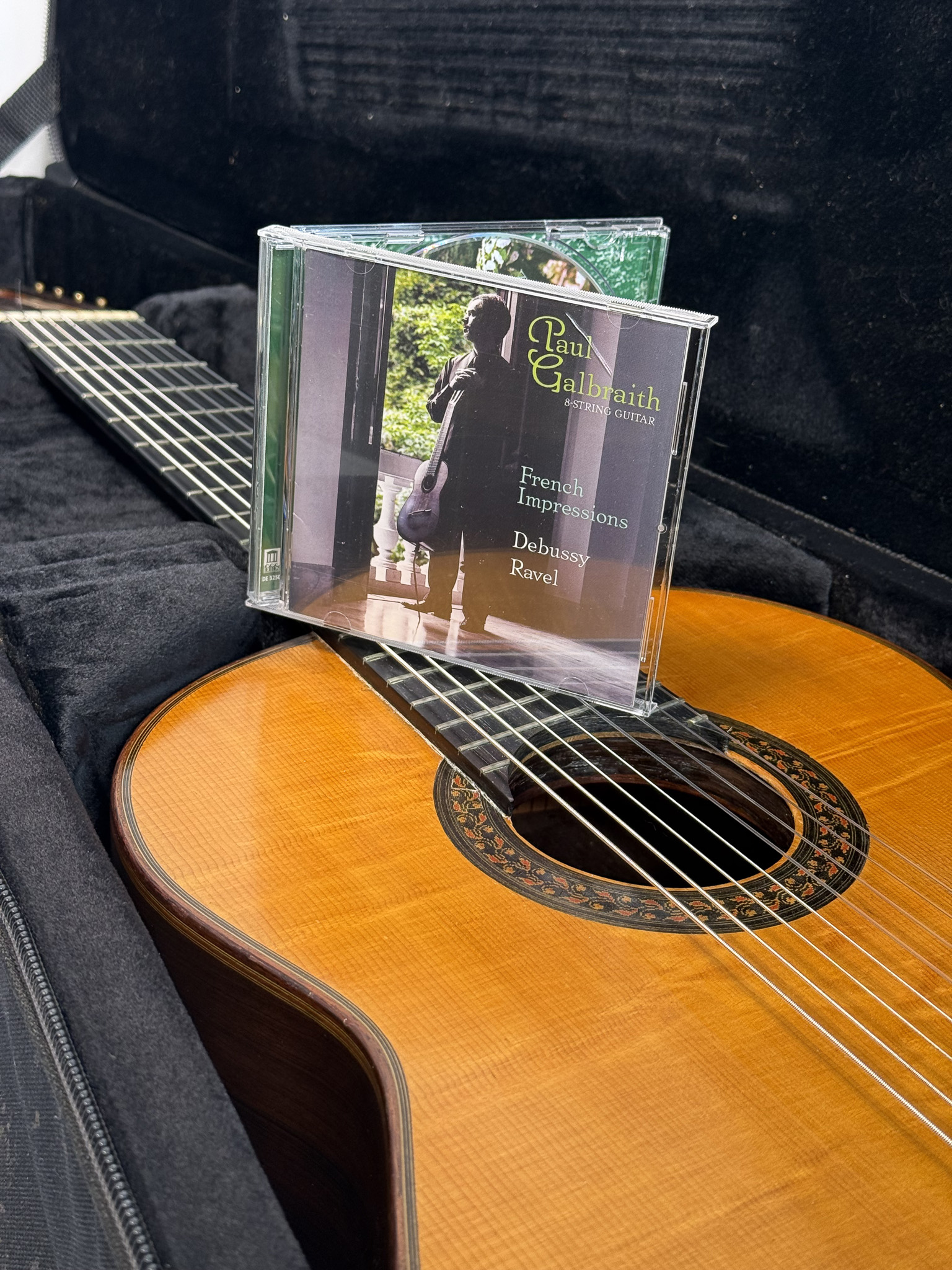
The instrument subsequently became inseparable from Galbraith’s artistic identity. He brought the Brahms Guitar to concert stages around the world and used it extensively for his recordings and transcriptions of music by Bach, Haydn, Mozart, Brahms, Debussy, Ravel and others. His celebrated recording of Bach’s complete Sonatas and Partitas for Solo Violin received a Grammy nomination and became one of the recordings most closely associated with his revolutionary approach to the guitar.
This particular instrument represents the final chapter of the collaboration between Rubio and Galbraith. Paul Galbraith received the guitar directly from David Rubio in July 2000. Only three months later, in October 2000, David Rubio passed away. This would prove to be the final guitar of his life. Galbraith continued to use this instrument extensively in concerts and recordings. Over years of performance, it became far more than an example of an experimental guitar design, it became the working instrument of the very artist whose musical ideas had inspired its creation.
From a collector’s perspective, few modern guitars combine such layers of significance. It is the last guitar of David Rubio, the mature expression of the revolutionary Brahms Guitar concept developed with Paul Galbraith, and an instrument with extensive direct provenance to the musician for whom it was created. It represents not only the final work of a great maker, but the culmination of a rare creative partnership between luthier and musician—an instrument conceived together, refined through performance, and ultimately made part of modern classical guitar history.
Specifications:



Fonzo Selection
Email: fonzoselection@gmail.com
Contact No. +66918869339
Whatsapp: +66918869339
COPYRIGHT©2020-2030 FONZO GUITAR. ALL RIGHTS RESERVED.